10 Affordable Couples Watches: Matching Pairs on a Budget
By Marcus Bellamy · Published · Updated · 4 min read

Matching watches sound like a gimmick until you try one on. A well-chosen pair solves a real problem: two people who want to mark something together without wearing identical jewellery-box clichés. The trick is picking a design that scales down cleanly for a smaller wrist while still looking right on a 40–42 mm case, and keeping the total spend sensible.
This guide covers the ten pairings worth considering, roughly ordered from dressy to casual, plus the sizing maths, movement trade-offs and strap swaps that decide whether a pair gets worn daily or lives in a drawer. Expect to pay AU$120–400 for the pair if you buy carefully; above that you are paying for branding, not better timekeeping.
Start With Case Size, Not Colour
The single biggest reason couples watches fail is a shared 42 mm case on a 15 cm wrist. Aim for a his-and-hers split of roughly 38–40 mm and 32–34 mm, or pick a unisex 36–38 mm design and let the strap do the differentiating. Measure the wrist with a strip of paper, add about 1 cm for comfort, and check the lug-to-lug length against that number — a 48 mm lug-to-lug on a 16 cm wrist is the practical ceiling.
Lug width matters just as much. A 20 mm lug width opens up hundreds of cheap leather, NATO and mesh options; 18 mm is fine but slightly narrower in choice. If the pair you like uses an odd 21 mm lug, buy two spare straps at the same time or accept that swapping will be annoying. This is the sort of practical detail worth checking before you commit, much like the sizing rules in our daily watch budget guide.
- His case: 38–40 mm, lug-to-lug under 48 mm
- Hers case: 32–34 mm, or a shared 36 mm unisex case
- Stick to 18 mm or 20 mm lug widths for strap choice
- Check the clasp or buckle size on mesh and leather
Quartz vs Automatic at This Price
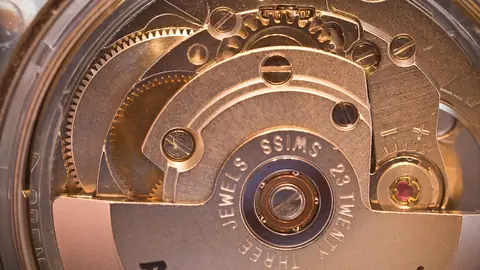
Under AU$400 for a pair, quartz is the honest choice. A decent quartz movement drifts a few seconds a month, needs a battery every two to three years, and keeps the case thin — usually 7–9 mm, which sits better under a cuff. Automatic movements at this price tend to add 2–3 mm of thickness and cost you accuracy; expect ±10 to ±20 seconds a day on a budget automatic, plus a service bill in five to seven years that can approach the watch's value.
If one of you genuinely wants mechanical, buy one automatic and one quartz rather than two compromised automatics. Solar quartz is the sweet spot for a pair: no battery swap for a decade or more, thin cases, and typically AU$30–80 more per watch than standard quartz. Whatever the movement, check the water resistance — 3 ATM survives handwashing, 5 ATM is the sensible minimum for a pair that will see rain and dishes.
Ten Pairings That Work
The strongest pairs share a dial layout and differ in scale, not in style. A 38 mm field watch with a 32 mm sibling, both on canvas straps, reads as intentional; a diver and a dress watch bought as a "set" usually reads as two unrelated gifts. Look for the same handset, the same numeral font and ideally the same dial colour, then let case finish and strap material separate the two.
Beyond the matched pair, mismatched-but-coordinated works well: a steel mesh bracelet on one and a tan leather strap on the other, same case shape. That approach also survives a strap change later without breaking the theme. Budget AU$60–120 per watch for a clean quartz pair, AU$100–180 for solar, and keep AU$40–60 aside for two spare straps — the cheapest way to make a pair feel bespoke.
- Minimalist dress pair: 38 mm and 32 mm, white dials, black leather
- Field pair: 38 mm and 34 mm, canvas or NATO straps
- Diver-style pair: 40 mm and 34 mm, rotating bezel, rubber strap
- Square-case pair: 34 mm and 28 mm, mesh bracelet
- Chronograph pair: 40 mm and 36 mm, one steel, one leather
- Digital pair: 38–42 mm resin cases, both on silicone
Styling Rules for Two Watches
Treat the pair as one outfit element, not two. If one watch is loud — bright dial, chunky bezel, gold tone — the other should be quiet. Metal tone is the usual sticking point: mixed gold and silver across two wrists looks accidental, so agree on steel, or agree on a two-tone design that legitimises both. Black dials are the safest shared base and photograph better than white in most lighting.
Strap colour should echo something else in the outfit — belt, shoes, bag — rather than match the other person's wrist exactly. Matching straps are fine for a wedding or a photo, but daily wear looks better when the pair shares a case and dial and differs in strap. Keep a spare in each size: a AU$25 leather strap turns a summer pair into a winter one.
Buying Well and Looking After Them
Skip gift-boxed "couple sets" sold as a single SKU. They usually hide a 3 ATM case, mineral glass and a pressed clasp, and you cannot size the two watches independently. Buy two separate references instead, even from the same line, so each bracelet can be sized properly — a loose bracelet on a 15 cm wrist will rotate and scratch. Ask for the bracelet to be sized in-store and keep the removed links.
Maintenance is simple: rinse resin and steel with fresh water after sweat, wipe leather with a dry cloth and let it air, and replace cracked straps before they fail at the spring bar. If the pair sits unworn for months, pull the crowns to stop battery drain on quartz. For the wider grooming and accessory routine that goes with daily wear, our beard grooming kit checklist covers the items actually worth owning.
| Pairing | His / Hers case | Movement | Pair price (AU$) | Best for |
|---|---|---|---|---|
| Minimalist dress | 38 mm / 32 mm | Quartz | 120–200 | Weddings, office |
| Field | 38 mm / 34 mm | Quartz or solar | 140–240 | Everyday, travel |
| Diver-style | 40 mm / 34 mm | Quartz | 180–300 | Beach, weekends |
| Square case | 34 mm / 28 mm | Quartz | 130–220 | Dressy, vintage look |
| Chronograph | 40 mm / 36 mm | Quartz | 220–380 | Smart casual |
| Solar casual | 39 mm / 33 mm | Solar quartz | 200–320 | Low maintenance |
| Digital | 42 mm / 38 mm | Digital | 100–180 | Gym, outdoors |
- Buy two separate references, not a boxed set, so each bracelet sizes correctly.
- Aim for a 38–40 mm and 32–34 mm split, or a shared 36 mm unisex case.
- Quartz or solar beats budget automatic on thinness, accuracy and running cost.
- Budget AU$40–60 for spare straps — the cheapest way to make a pair feel personal.
Marcus has spent years testing grooming tools, watches and everyday menswear and writing up what actually holds up to daily use. He focuses on value, fit and the small practical details buyers only notice after a few weeks. He edits every recommendation guide on the site.