10 Best Digital Watches: Features, Durability, Battery
By Marcus Bellamy · Published · 5 min read
Digital watches have quietly become the most practical thing on a man's wrist. No winding, no servicing bills, and a screen you can read in a glance at a dark train platform. But the category spans a $20 drugstore pick-up to $500 tool watches, and the differences that matter are rarely the ones on the marketing sheet.
Below you'll find ten picks grouped by how you'll actually use them, plus a straight comparison of battery life, water resistance and case size. Prices are typical street prices in US dollars; expect to pay more in Europe and less during seasonal sales.
What Actually Matters on a Digital Watch
Start with the display. A basic LCD with a fixed seven-segment layout is the most legible and the cheapest to run, but it can't show much beyond time, date and a stopwatch. Dot-matrix or hybrid LCDs show menus, world time and workout data, at the cost of contrast in bright sun. If you train outdoors, look at the screen in daylight before buying.
Water resistance is the second filter. A rating of 30m means splash-proof only; 50m handles handwashing; 100m is the realistic minimum for swimming; 200m is where dive-style digital watches live. Remember that ratings are static pressure tests, not depth guarantees, and buttons that get pressed underwater will let moisture in.
Battery is the third. A plain LCD module typically runs two to ten years on a coin cell, while GPS and heart-rate models need charging every few days to a few weeks. Solar charging sits in between and suits anyone who hates cables. Finally, check case size: 38–42mm suits most wrists, and anything over 45mm reads bulky under a cuff.
- Legibility in daylight beats feature count
- 100m water resistance or better for swimming
- Coin-cell or solar for low-maintenance wear
- 38–42mm case fits most wrists
Budget Picks Under $50
At this price the goal is simple: accurate timekeeping, a readable screen and a strap that won't disintegrate in a year. Classic resin models from the big Japanese makers dominate here, and for good reason. Their modules are proven, spare parts are everywhere, and a dead battery costs less than a sandwich to replace at a local jeweller.
Look for a mineral crystal rather than bare plastic if you can find it, and check the strap material. Resin is light and cheap but yellows and cracks; polyurethane lasts longer; stainless steel bracelets add weight and cost. A backlight matters more than most buyers expect, especially if you're up early or work shifts.
One honest caveat: these watches are rarely serviceable. Treat them as five-to-ten-year consumables. That's fine, and arguably better value than a $150 fashion watch with the same module inside a heavier case. If you want to spend deliberately rather than cheaply, our guide on how much to spend on a daily watch lays out the trade-offs clearly.
- Proven Japanese modules, cheap battery swaps
- Check strap material: resin vs polyurethane
- Backlight is not a luxury feature
- Accept a 5–10 year lifespan
Sports and Training Models
Once you add a step counter, GPS or heart-rate sensor, the watch becomes a computer. Battery life drops accordingly: expect roughly 5–14 days in smartwatch mode, but only 8–40 hours with GPS running. That number matters more than the marketing headline, so look for the GPS-active figure rather than the standby figure.
Sensor accuracy varies widely. Wrist-based heart rate is decent at rest and poor during intervals or lifting, where a chest strap still wins. GPS accuracy improves with dual-band chips, which are now appearing in mid-range models. If you mainly walk and cycle, a simpler model with a good app will serve you better than a flagship with features you'll never open.
Comfort is underrated. Silicone or nylon straps breathe better than resin over long sessions, and a lighter case reduces wrist fatigue during runs. Our breakdown of digital watch features that matter goes deeper on which sensors are worth paying for and which are padding.
- Check GPS-active battery hours, not standby days
- Wrist HR is fine at rest, weak during intervals
- Dual-band GPS improves accuracy in cities
- Silicone or nylon straps for sweaty sessions
Rugged and Outdoor Digital Watches
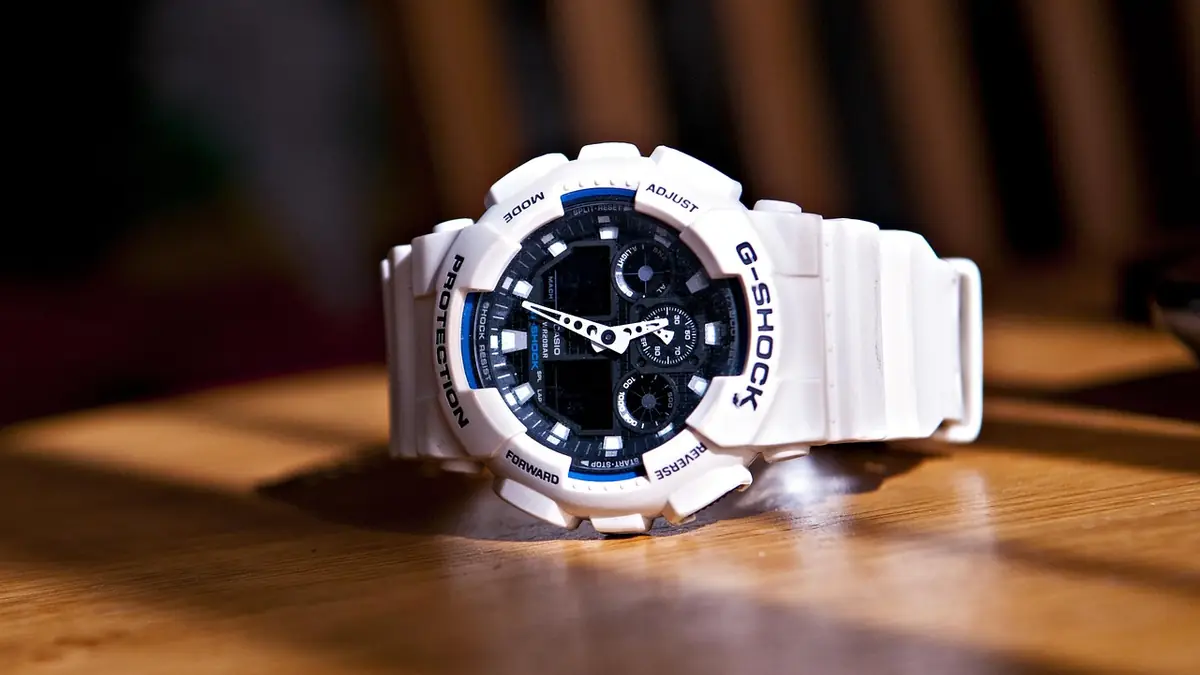
For hiking, site work and travel, the priorities flip: shock resistance, a clear backlight, world time and a compass or barometer if you'll use them. Many rugged models meet military shock and dust standards, which is a useful shorthand even if you never test it. A raised bezel protecting the crystal does more for real durability than any rating.
Weight and bulk are the trade-off. A 60mm case with a thick resin shroud feels indestructible and snags on sleeves constantly. If you wear a jacket most of the year, aim for something under 50mm and around 60–80g. Also check the lug width before buying a replacement strap; odd sizes limit your options badly.
Solar charging is genuinely useful in this category. A few hours of decent light per week keeps most solar modules topped up, and you can leave the watch in a drawer for months without it dying. Just don't store it in a dark box for a year and expect it to wake up smiling.
- Raised bezel protects the crystal best
- Keep it under 50mm and 80g for daily wear
- Check lug width before buying straps
- Solar suits outdoor and travel use
| Category | Typical price | Battery / runtime | Water resistance | Case size |
|---|---|---|---|---|
| Budget LCD | $15–$50 | 5–10 years (coin cell) | 30–100m | 36–42mm |
| Mid LCD with sensors | $50–$120 | 2–5 years (coin cell) | 100–200m | 42–48mm |
| GPS sports | $150–$400 | 8–40 hrs GPS, 5–14 days smart | 50m | 42–47mm |
| Rugged outdoor | $80–$350 | Solar or 2–7 years | 100–200m | 45–55mm |
| Hybrid analog-digital | $100–$300 | 2–3 years | 50–100m | 40–44mm |
| Smartwatch | $150–$500 | 1–14 days, charge weekly | 50m | 40–46mm |
Styling a Digital Watch
A digital watch reads casual by default, and that's fine. It pairs naturally with denim, chinos, knitwear and anything workwear-adjacent. The mistake is forcing it under a formal cuff: a chunky resin case with a suit looks like you forgot your real watch, and a slim steel digital is the only version that gets close to smart-casual.
Strap swaps do most of the work. A black resin strap is sporty, a grey nylon NATO is casual and cheap to replace, and a steel bracelet or mesh band lifts a slim digital into office territory. Keep the strap width matched to the lugs and the colour within one step of your shoes or belt.
If you're buying a pair of watches, matching means shared proportions and finish rather than identical models. Our piece on affordable couples watches that actually match covers how to pair sizes and metals without looking like a costume.
- Keep digital to casual and smart-casual
- NATO straps are cheap, washable and easy to swap
- Steel bracelet lifts a slim digital
- Match strap width to lug width exactly
Buying Used and Keeping It Running
Digital watches depreciate fast, which makes the used market generous. A two-year-old sports model often sells for 40–60% of new, and the main risks are a worn strap, a scratched crystal and a battery that's near the end. Ask for a photo of the screen with the backlight on; dead segments and faded polarisers are easy to spot that way.
Maintenance is minimal but not zero. Rinse a resin watch in fresh water after swimming in the sea, avoid pressing buttons wet, and replace the caseback gasket whenever the battery is changed. A jeweller will usually do battery and gasket together for a modest fee, and that single habit is what keeps a cheap watch watertight for years.
For anyone layering products into a routine, the order you apply them matters more than the count, as explained in grooming routine order. The same logic applies to watch care: a few consistent habits beat an occasional deep clean.
- Used sports models often sell at 40–60% of new
- Check backlight photo for dead segments
- Rinse off salt water, never press buttons wet
- Replace the gasket with every battery
- Pick water resistance first: 100m is the realistic minimum for swimming
- Coin-cell or solar modules mean years without charging
- GPS and heart rate cost battery life; check the active figure
- A strap swap changes the look more than any other upgrade
Marcus has spent years testing grooming tools, watches and everyday menswear and writing up what actually holds up to daily use. He focuses on value, fit and the small practical details buyers only notice after a few weeks. He edits every recommendation guide on the site.