Buzz Cut Styles Explained: Guard Numbers and Face Shapes
By Marcus Bellamy · Published · 4 min read
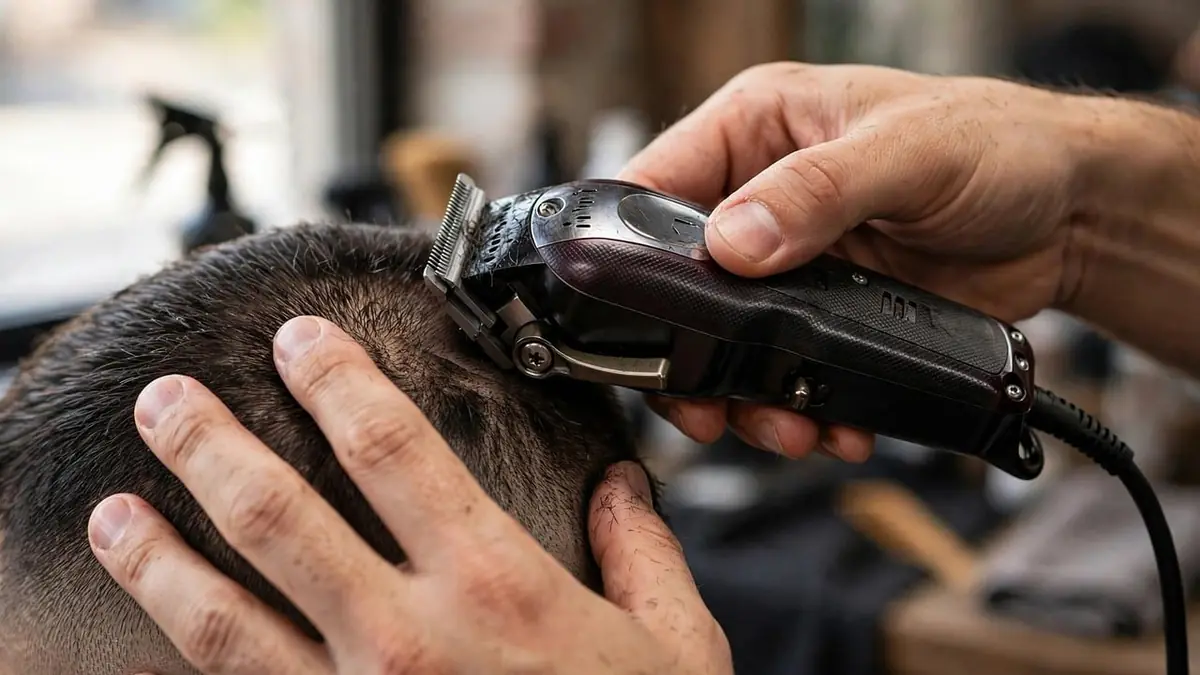
A buzz cut looks like the simplest haircut in the world until you sit in the chair and someone asks which guard you want. The difference between a #1 and a #4 is the difference between a shadow and a short crop, and the same length that sharpens a square jaw can make a round face look rounder.
This guide maps guard numbers to real millimetre lengths, explains how face shape should steer the choice, and covers the practical side: skin vs scalp, blending, and how often you'll be back in the chair (or holding the clippers yourself).
What Clipper Guard Numbers Actually Mean
Guard numbers are not arbitrary. On most clippers, each number adds roughly 3 mm (1/8 inch) to the cutting length, starting from a #0 that leaves about 1.5 mm. So a #1 leaves around 3 mm, a #2 about 6 mm, a #3 around 10 mm and a #4 close to 13 mm. A #8 lands near 25 mm, which is really a short crop rather than a buzz.
Brands vary slightly, and some use half guards (#1.5, #2.5) to fine-tune transitions. Ask your barber which system they use or check the guard itself; the millimetre figure is usually stamped on the plastic. If you cut your own hair, stick to one brand's guards so your reference points stay consistent between cuts.
- #0 — about 1.5 mm, near-shaved stubble
- #1 — about 3 mm, tight shadow
- #2 — about 6 mm, classic buzz
- #3 — about 10 mm, short crop
- #4 — about 13 mm, soft crop
- #8 — about 25 mm, longest buzz/crop
The Main Buzz Cut Variants
The induction cut is the shortest: clippers with no guard, leaving a faint shadow, sometimes finished with a razor at the sides. It suits dense, straight hair and a confident, low-maintenance routine, but it exposes the scalp shape completely, so any scars or uneven patches show.
The classic buzz sits at a #2 or #3 all over with a clean taper at the neckline and sideburns. It's the safest entry point for most men and the easiest to grow out without an awkward stage. The fade buzz — often a #1 on top with the sides faded down to skin — reads sharper and more modern, while the burr cut (a #1 or #2 all over) is the shortest style that still looks deliberately cut rather than shaved.
- Induction: no guard, razor finish optional
- Classic buzz: #2–#3 all over, tapered edges
- Fade buzz: #1–#2 on top, skin fade at sides
- Burr cut: #1–#2 uniform, shortest 'cut' look
Matching Length to Face Shape
Round faces benefit from a little height on top and tighter sides. A #3 or #4 on top with a #1 fade at the sides creates a vertical line that balances width at the cheeks. A uniform #1 all over tends to emphasise roundness, so keep some length where the head is flattest.
Square and rectangular faces can take the tightest options: an induction or #1 buzz highlights a strong jaw instead of fighting it. Oval faces are the most flexible and can carry anything from a #1 to a #4, though a slight taper at the sides usually looks cleaner than a flat all-over length. Heart-shaped faces look best with a bit more length at the temples to soften a wider forehead.
- Round: #3–#4 top, #1 faded sides
- Square: #0–#2 all over, clean edges
- Oval: #1–#4, taper the sides
- Heart: #2–#3 with length at temples
- Long: uniform #2–#3, avoid extra height
Skin Fades, Tapers and Necklines
A buzz cut lives or dies on its edges. The neckline should follow a natural curve rather than a straight line, and the sideburns should be squared or tapered to match the hairline. A skin fade — where the sides go down to bare skin — needs re-cutting every 10 to 14 days before it looks scruffy, while a #1 taper can stretch to three weeks.
If you cut your own hair, do the sides first and work upward, using the longest guard you'll wear on top. A second mirror or a phone camera helps with the back. Keep a consistent line at the nape, and don't chase perfection around the ears; a barber's five-minute cleanup is cheaper than an uneven patch that takes a month to grow out.
- Curve the neckline, don't square it
- Match sideburn length to the top
- Skin fades: touch up every 10–14 days
- Tapers: every 2–3 weeks
Hair Type, Growth and Scalp Care
Straight, dense hair takes a buzz beautifully; coarse or curly hair can look patchy at #1 and often reads better at #3 or #4. Thinning hair benefits from a uniform short length because it removes the contrast between thick and thin areas. Cowlicks are more visible when short, so leave a little extra length at the crown if you have one.
A shaved or near-shaved head needs sun protection — a hat or SPF 30+ on exposed scalp — and a light moisturiser to prevent flaking. If you're layering grooming products, apply them in the right order: cleanser, then treatment, then moisturiser, then sunscreen. Our grooming routine order guide breaks that sequence down step by step.
- Straight/dense: #0–#3 works well
- Curly/coarse: #3–#4 to avoid patchiness
- Thinning: uniform length, no contrast
- Scalp: SPF 30+ and light moisturiser
| Guard | Approx. length | Look | Best for | Upkeep |
|---|---|---|---|---|
| #0 | 1.5 mm | Near-shaved shadow | Square faces, dense hair | 7–10 days |
| #1 | 3 mm | Tight burr | Square/oval, strong jaw | 10–14 days |
| #2 | 6 mm | Classic buzz | Most face shapes | 2 weeks |
| #3 | 10 mm | Short crop | Round faces, curly hair | 2–3 weeks |
| #4 | 13 mm | Soft crop | Round/heart faces | 3 weeks |
| #8 | 25 mm | Longest buzz | Growing out, cowlicks | 3–4 weeks |
Cost, Upkeep and Doing It Yourself
Barbershop buzz cuts typically cost less than a scissor cut — often 30–50% less depending on the city — and take 15 to 25 minutes. Four-weekly visits add up, so many men buy a clipper set for home use and see a barber every second or third cut for the edges and fade.
A decent clipper set costs roughly the price of two or three shop cuts and lasts years if you oil the blades and clean them after each use. Cut on dry hair, go slowly, and start with a longer guard than you think you need; you can always take more off. If you're building a grooming kit, our beard grooming kit checklist covers the tools that overlap with head grooming.
- Shop buzz: usually cheaper than a scissor cut
- Home clippers: pay for themselves in 2–3 cuts
- Oil and clean blades after every use
- Cut dry, start long, go slow
- Each guard number adds roughly 3 mm; a #2 is about 6 mm.
- Match length to face shape: tighter for square, longer on top for round.
- Skin fades need a touch-up every 10–14 days; tapers last 2–3 weeks.
- Protect an exposed scalp with SPF 30+ and keep clippers oiled.
Marcus has spent years testing grooming tools, watches and everyday menswear and writing up what actually holds up to daily use. He focuses on value, fit and the small practical details buyers only notice after a few weeks. He edits every recommendation guide on the site.